
Guide
Fashion coloring pages: what they are and how to colour them
Outfit line art, a palette, and no rule about staying inside the lines. Here is how fashion coloring pages differ from every other colouring sheet, and how to make yours look styled rather than filled in.
Most colouring books hand you a mandala, a forest animal or a floral border. Fashion coloring pages hand you an outfit: a cropped leather jacket over wide trousers, a tiered gown with a beaded bodice, a pleated skirt with loafers and a tiny shoulder bag. The drawing is finished. The styling decision — every colour, every fabric — is yours.
That difference is the whole appeal. You are not decorating a pattern, you are dressing someone. It scratches the same itch as building an outfit in your head on the way to work, except the result exists afterwards.
What makes a page a fashion coloring page
Three things separate an outfit page from a generic colouring sheet:
- A complete look, not a single garment. Shoes, bag and jewellery are drawn in, so your colour choices have to work together the way a real outfit does.
- Fabric drawn as fabric. Lace has holes, sequins catch light, leather creases, knit has a rib. The line art tells you what the material is before you colour it.
- Real proportions. Pages made for adults use a fashion-illustration figure rather than a cartoon one, which is why the finished page reads as a styled look.
Printable pages versus digital pages
Search for fashion coloring pages and you will mostly find PDFs to print. Printables are lovely: paper, pencils, no screen, and something to pin on a wall afterwards. They also have real friction — you need a printer, decent paper, a set of pencils that covers the shade you had in mind, and one wrong stroke is permanent.
Digital pages trade the paper for three things printables cannot offer:
- Unlimited undo. A colour that looked right in your head and wrong on the page costs you one tap, not a whole sheet.
- The same look in several colourways. Colour a gown in emerald, then try it in oxblood, and keep both.
- Textures you could not draw by hand. Sequins, tweed and lace applied as a material rather than as hundreds of tiny pencil marks.
Neither one wins. If you want an evening away from screens, print. If you want to colour on a train, in bed, or in the ten minutes before a meeting, digital is the format that actually fits.
How to choose colours that work
The most common reason a finished page looks busy is that every garment got its own favourite colour. Stylists solve this with a simple ratio, and it works just as well on a coloring page.
- Pick one dominant colour for the largest area — usually trousers, a skirt or a gown. This is roughly 60% of the outfit.
- Add a supporting neutral for the second-largest piece: cream, ink, taupe, denim, olive. About 30%.
- Keep one accent for the small things — shoes, a bag, a belt, earrings. About 10%. This is the part people notice.
If you want a shortcut, borrow a palette from something that already works: a photograph you saved, a room you like, the cover of a book. Three colours pulled from one image will almost always sit together.
Where textures change everything
Flat colour is fine. Texture is what makes a page look finished. The same black jacket reads completely differently as matte leather, as crushed velvet, or as sequins — and the illustration was drawn to support all three. Choosing a material rather than a shade is the fastest way to make two colourways of the same look feel like two different outfits.
Try a fashion coloring page right now
The home page has a real page from the app that you can colour in your browser — tap a garment to fill it, then switch on leather, sequins or lace. No download, no sign-up.
Colour a page in the browser →93 pages across 11 collections
Color the Look is a fashion coloring book for iPad and iPhone. Every page is a hand-drawn editorial look, divided into zones so a single tap fills a sleeve or a boot exactly where it should stop. There are currently 93 pages in 11 themed collections, and a new drop is added every week:
- Summer Edit — sequins, mesh, cargos, crochet and glossy little bags.
- Dress Code — polished dresses with ruffles, satin and bows.
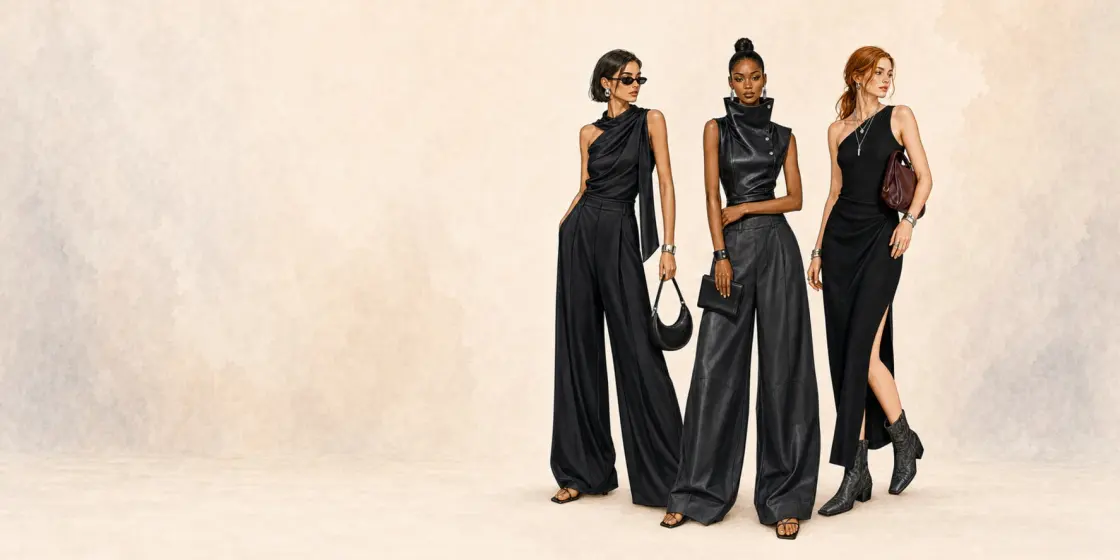
- The Noir Edit — sculptural black layers, fluid volume, polished leather.
- The Red Carpet Edit — corsetry, jewel-tone satin and couture trains.
- The Autumn Edit — suede, brushed knit and heritage plaid.
- The Campus Edit — wide tailoring, pleated skirts and loafers.
- The Boots Edit — lacquered stilettos, riding shafts, moto soles.
- The Velvet Hour Edit — crimson drape, liquid gold, midnight satin.
- The Color Theory Edit — saturated clashes and playful proportions.
- The Modern Heritage Edit — tweed, jewelled trim, vintage codes.
- Vacation Outfits — resort dinners and market mornings.
Finished pages are saved to a personal Lookbook, so the pages you colour accumulate into your own styled gallery rather than disappearing.
Frequently asked
What are fashion coloring pages?
Fashion coloring pages are outfit illustrations drawn as black-and-white line art so you choose every colour. A page shows a complete styled look — jacket, skirt, shoes, bag — rather than a single garment, which is what separates them from generic colouring sheets.
Are fashion coloring pages for adults or for kids?
Both exist, but the detail level differs. Pages made for adults use realistic proportions, fabric textures like lace and sequins, and small details such as buckles and jewellery. Pages for children use simpler shapes and larger areas.
Are digital fashion coloring pages better than printables?
They solve different problems. Printables give you paper, pencils and no screen. Digital pages give you unlimited undo, the same page in several colourways, textures that would take hours by hand, and nothing to print or store. Plenty of people use both.
How do you choose colours for a fashion coloring page?
Pick three: one dominant colour for the largest garment, one supporting neutral, and one small accent for shoes, a bag or jewellery. Keeping the accent to roughly ten percent of the outfit is what makes a page look styled rather than busy.
Do I need to be able to draw?
No. The illustration is already finished. You are choosing colours and materials, not drawing lines, so there is no sketching and no blank-page pressure.